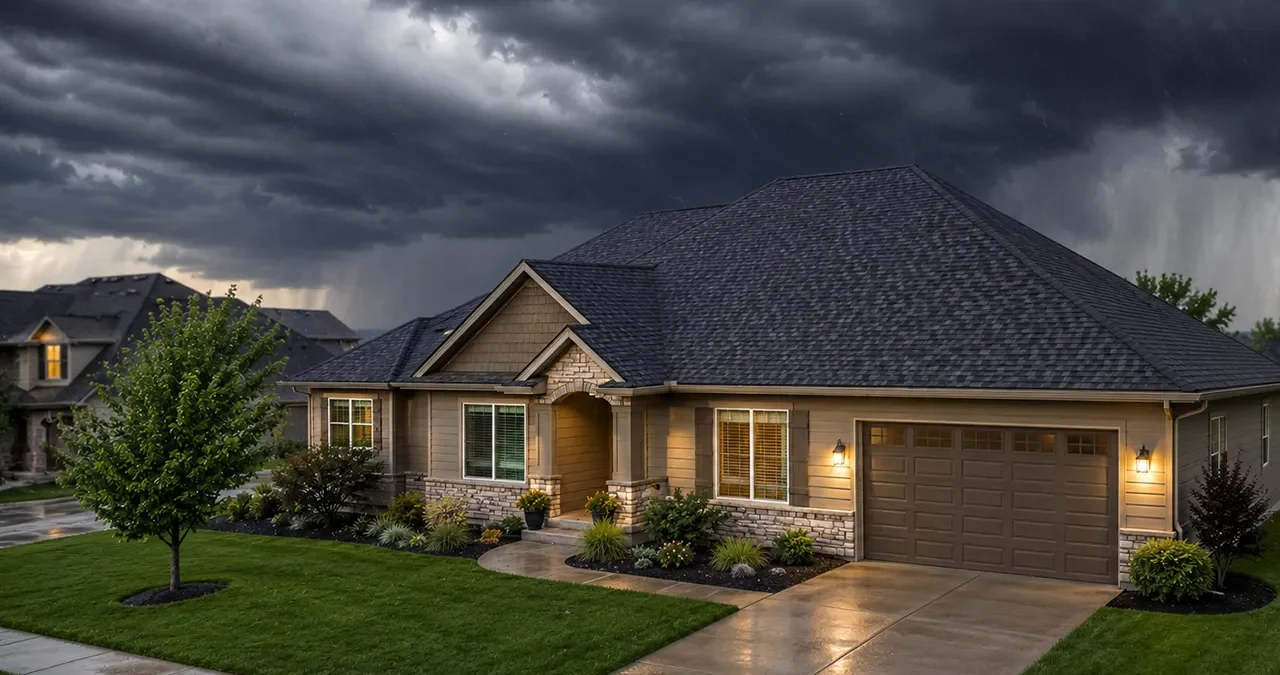
A practical guide for Wichita-area homeowners comparing Class 4 shingles, storm protection, and roof replacement value, and asking themselves: Are impact-resistant shingles worth it?
Storm season in South Central Kansas can be hard on a roof. Hail, wind, heavy rain, flying debris, and fast-moving weather systems can all take a toll on shingles, flashing, gutters, and other exterior components. For Wichita-area homeowners, that raises an important question when it is time for a roof replacement: are impact-resistant shingles worth the extra cost?
For many homes in Wichita, Haysville, Derby, Andover, Goddard, Maize, and nearby Kansas communities, the answer is often yes, especially when the roof is already due for replacement or the homeowner wants better protection against recurring hail and wind damage. Impact-resistant shingles are not storm-proof, and they cannot guarantee that your roof will never need repairs. However, they can be a smart upgrade for homeowners who want a stronger roofing system, fewer storm-related headaches, and the possibility of insurance savings.
American Roofing & Construction regularly installs impact-resistant shingles for local roofing projects and can help homeowners understand whether a Class 4 roofing system makes sense for their home, budget, and insurance situation. If you are unsure about the condition of your current roof, a free roof inspection is a smart first step.
What Are Impact-Resistant Shingles?
Impact-resistant shingles are asphalt shingles designed and tested to better resist damage from hail and other impacts. The key term homeowners often hear is “Class 4 shingles.” Class 4 is the highest impact-resistance rating under the UL 2218 testing standard for roofing materials.
In plain language, a Class 4 rating means the shingle has been tested to withstand impact from a two-inch steel ball dropped from 20 feet without cracking, splitting, or showing certain types of failure on the back side of the shingle. According to GAF’s guide to impact-resistant roofing, products that withstand that two-inch steel ball drop from 20 feet receive the highest UL 2218 rating: Class 4. Lower ratings use smaller steel balls and different testing conditions. Class 4 is the highest rating in that testing system.
This does not mean Class 4 shingles are simply “the thickest” shingles. Some impact-resistant shingles use modified asphalt, reinforced construction, or other design features that help them absorb impact. The rating is based on tested performance, not thickness alone.
Why Kansas Homeowners Consider Class 4 Shingles
Kansas homeowners know that storm damage is not a rare problem. A roof may look fine from the ground after a storm, but hail can bruise shingles, loosen granules, damage vents, dent flashing, and weaken areas that may later become leak risks. Wind can lift shingles, expose fasteners, or create openings where water can enter during future storms.
Impact-resistant shingles are designed to help reduce some of that damage. They can be especially valuable for homes that have experienced repeat hail claims, properties with older roofs, or homeowners who are replacing a roof after storm damage and want a more durable system going forward.
For homeowners comparing a standard residential roofing system with a Class 4 upgrade, the decision usually comes down to four things:
- How often the area experiences hail and severe storms
- The age and condition of the current roof
- The upfront cost difference
- Whether the homeowner’s insurance carrier offers a discount for qualifying impact-resistant shingles
Impact-Resistant Shingles vs. Standard Asphalt Shingles
Standard architectural asphalt shingles remain a popular roofing choice because they are cost-effective, attractive, and available in many styles. For many homes, they perform well when installed properly. However, standard shingles are not always designed to handle repeated hail impact as well as Class 4 shingles.
Impact-resistant shingles are built to provide added durability during severe weather. Depending on the product, they may offer stronger resistance to cracking, splitting, granule loss, and impact-related wear. Many Class 4 shingles also come with strong wind ratings, which can be helpful during Kansas storms that bring both hail and high winds.
The main difference is not that impact-resistant shingles make a roof invincible. The difference is that they give the roof a better chance of holding up when hail and wind hit. That added performance can reduce the likelihood of minor hail damage, help protect the roof system longer, and potentially lower the need for repairs after smaller storm events.
How Much More Do Impact-Resistant Shingles Cost?
Impact-resistant shingles usually cost more upfront than standard asphalt shingles. On average, national roofing cost guides often place Class 4 or impact-resistant asphalt shingles $1 to $2.50 more per square foot installed, compared with standard architectural shingles. The final price depends on the roof size, pitch, access, tear-off needs, decking condition, ventilation, underlayment, labor, and the specific roofing system selected.
For a typical roof, that can mean the Class 4 upgrade costs more at installation. However, the better question is not only, “What does it cost today?” The better question is, “What value does it provide over the life of the roof?”
In Kansas, the long-term value may come from better storm performance, fewer repairs after smaller hail events, possible insurance discounts, and added confidence during storm season. The numbers vary from home to home, which is why American Roofing & Construction recommends reviewing your options during a professional roof evaluation before making a final decision.
Can Impact-Resistant Shingles Lower Insurance Costs?
Some insurance carriers offer premium discounts for qualifying Class 4 impact-resistant shingles because these roofing systems may reduce the likelihood or severity of hail-related claims. However, discounts are not guaranteed. They vary by insurance company, policy, location, roof system, and documentation requirements.
Before choosing a shingle, homeowners should contact their insurance agent and ask direct questions. This helps avoid surprises and gives you a clearer picture of whether the upgrade may offset part of the added cost over time.
Questions to Ask Your Insurance Company
- Do you offer a discount for Class 4 impact-resistant shingles?
- Which shingle ratings, products, or documentation do you require?
- Does the discount apply to my current policy?
- How much could I save annually?
- Will the discount change my deductible, coverage, or claim terms?
- What proof do you need after installation?
Standard documentation may include a paid invoice, product information showing the Class 4 or UL 2218 rating, warranty information, installation details, and photos or completion records from the roofing contractor. American Roofing & Construction can provide inspection findings and project documentation that homeowners may share with their insurance carrier or adjuster when needed.
What Impact-Resistant Shingles Can and Cannot Do
Impact-resistant shingles can be a strong upgrade, but it is important to understand their limits. They are designed to resist impact damage better than many standard shingles, but they are not hail-proof. Large hail, wind-driven debris, extreme storm conditions, poor installation, old decking, or damaged flashing can still create problems.
Class 4 shingles also do not replace the need for proper installation. A roof is a complete system. Shingles matter, but so do underlayment, starter strips, ridge caps, flashing, ventilation, decking, fasteners, and workmanship. A premium shingle installed poorly will not perform the way it should.
That is why homeowners should look beyond the shingle label alone. The right roofing contractor should explain the full system, inspect the existing roof structure, review ventilation concerns, follow manufacturer instructions, and provide clear recommendations without pressure.
When Are Class 4 Shingles Most Worth It?
Impact-resistant shingles make the most sense when the added protection aligns with the homeowner’s long-term goals. They may be especially worth considering if:
- Your roof has been damaged by hail before
- You live in a Wichita-area neighborhood that sees frequent storm activity
- Your current roof is already near the end of its useful life
- You are planning a full roof replacement in Wichita or the surrounding area
- Your insurance carrier offers a meaningful discount for qualifying Class 4 shingles
- You plan to stay in the home long enough to benefit from the upgrade
- You want a stronger roof system before the next storm season
They may be less urgent if your current roof is newer, in excellent condition, and not due for replacement. In that case, a roof repair or maintenance recommendation may be more practical than replacing the roof early. A professional inspection can help you understand which option makes sense.
Do You Need a Roof Inspection Before Choosing Shingles?
Yes. Before investing in any new roofing system, it helps to know the current condition of your roof. A roof inspection can identify existing hail damage, missing shingles, soft spots, ventilation issues, flashing problems, leak risks, and other concerns that may affect your replacement options.
This is especially important after severe weather. Some storm damage is obvious, such as missing shingles or visible leaks. Other damage is harder to spot from the ground. Granule loss, bruised shingles, damaged vents, and lifted shingles may require a closer inspection.
American Roofing & Construction provides storm damage roof inspections for Wichita-area homeowners and can review the findings with you so you understand what is happening on your roof. If visible storm damage is found, the team can document affected areas and provide information homeowners may share with their insurance adjuster.
Why Local Roofing Experience Matters in Kansas
Roofing in Kansas requires practical experience with local weather patterns, storm damage, wind exposure, and seasonal roof wear. A roofing system that performs well in one region may not be the best fit for a home that regularly faces hail and high winds.
American Roofing & Construction is a trusted Wichita roofing company with 20+ years of roofing experience. The company works with homeowners throughout Wichita, Haysville, and South Central Kansas, providing residential roofing, commercial roofing, roof repair, roof replacement, free roof inspections, and storm damage support.
The team focuses on clear inspections, honest explanations, code- and manufacturer-compliant installation practices, and no-pressure recommendations. That approach matters because the best roofing decision is not always the most expensive option. It is the option that fits your roof, your budget, your insurance situation, and your long-term plans for the property.
So, Are Impact-Resistant Shingles Worth It?
For many Wichita-area homeowners, impact-resistant shingles are worth considering when it is time to replace the roof. They offer stronger impact resistance than standard shingles, can help reduce certain types of storm damage, may qualify for insurance discounts, and can provide added confidence during Kansas storm season.
The upgrade is not right for every home in every situation. If your roof is still in good shape, repair or maintenance may be the better short-term answer. If your roof is aging, storm-damaged, or already due for replacement, Class 4 shingles may be one of the smartest upgrades to discuss.
The best next step is a professional inspection. American Roofing & Construction can evaluate your roof, explain your options, and help you decide whether standard architectural shingles or impact-resistant shingles are the better fit for your home.
Request a Free Roof Inspection in Wichita or South Central Kansas
If you are thinking about replacing your roof, comparing Class 4 shingles, or wondering whether recent hail or wind damaged your roof, American Roofing & Construction is ready to help.
Call 316-461-6565 or request a free inspection online. Our experienced team will inspect your roof, review the findings with you, and provide practical recommendations to help protect your home through Kansas storm season and beyond.